
Role of Hero Images in Product Page Conversion | Photo Guide

Shoppers make purchasing decisions within the first three seconds of landing on a product page. Before reading descriptions or checking reviews, they've already judged your product based on what they saw. Hero images serve as the main visual anchor that either builds instant trust or triggers an immediate exit.
The primary photo does the heavy lifting. It encourages visitors to explore further, scroll down, and eventually click "add to cart." When that first image looks professional and appealing, customers engage. When it looks amateur or confusing, they leave. This pattern repeats across millions of transactions daily.
The maths is straightforward: better hero image ecommerce presentation leads to higher conversion rates. Stores that invest in optimizing their main product visuals consistently outperform those that treat photography as an afterthought. The first impression isn't just important – it's often the only impression you get.
Product Pages Live or Die by Their First Impression?
Consumers act quickly. Studies show that a product page has mere seconds, between three and five, to be assessed by a visitor before they decide whether to linger. In that split second, they can choose to linger and explore or click the back button. Price is indispensable, reviews are critical, but it never gets a chance because the page does not immediately catch their attention. The brain is quicker at processing images than text.
The hero image mostly handles this job. It stays at the top of the page, occupies the majority of screen space, and influences perceptions of the entire page. A clear, well-lit image of the product inspires trust. A blurry image of a generic type creates distrust. By having their questions about the thing answered – what it looks like, how it compares in size to what they searched for customers spend more time on the page.
What Is a Hero Image on a Product Page?
- A product page hero image is the large, dominant photograph displayed above the fold. Visitors see it immediately without scrolling. This image occupies prime visual real estate and carries the responsibility of communicating product value in a single frame. Hero images differ from other visual content:
Hero images serve as the primary product showcase and are responsible for instant value communication. Positioned above the fold and displayed at the largest size, they immediately capture attention and establish the core message of the page. - Gallery images support deeper exploration by presenting multiple angles, detailed shots, and feature highlights. Typically placed below the fold, they allow users to examine the product more closely without distracting from the initial impression.
- Lifestyle photos add contextual meaning by illustrating real-world usage scenarios and aspirational settings. Used in a secondary role, they complement the hero image by helping users imagine how the product fits into their everyday lives.
- User-generated content functions as social proof by providing authentic, real-world validation. When integrated into review sections or social feeds, it increases credibility and reinforces trust through shared user experience.
The Psychology Behind Hero Images
Processing fluency explains why clean, professional visuals convert better than cluttered alternatives. When images are easy to understand, viewers feel more confident about what they're seeing. This confidence reduces purchase anxiety and drives product page conversion upward.
The brain processes simple visuals faster. Speed creates comfort. Comfort builds trust. Customers don't analyze this consciously – they simply feel more certain about products presented clearly than about those shown in confusing or low-quality images.
Emotional response amplifies this effect. Premium-looking photography triggers associations with quality, safety, and superior functionality. Customers project image quality onto product quality automatically. A well-lit, properly composed photo suggests a well-made, reliable product. This psychological shortcut works constantly in ecommerce conversion optimization, rewarding brands that understand visual perception.
Hero Images as Trust Signals for Ecommerce
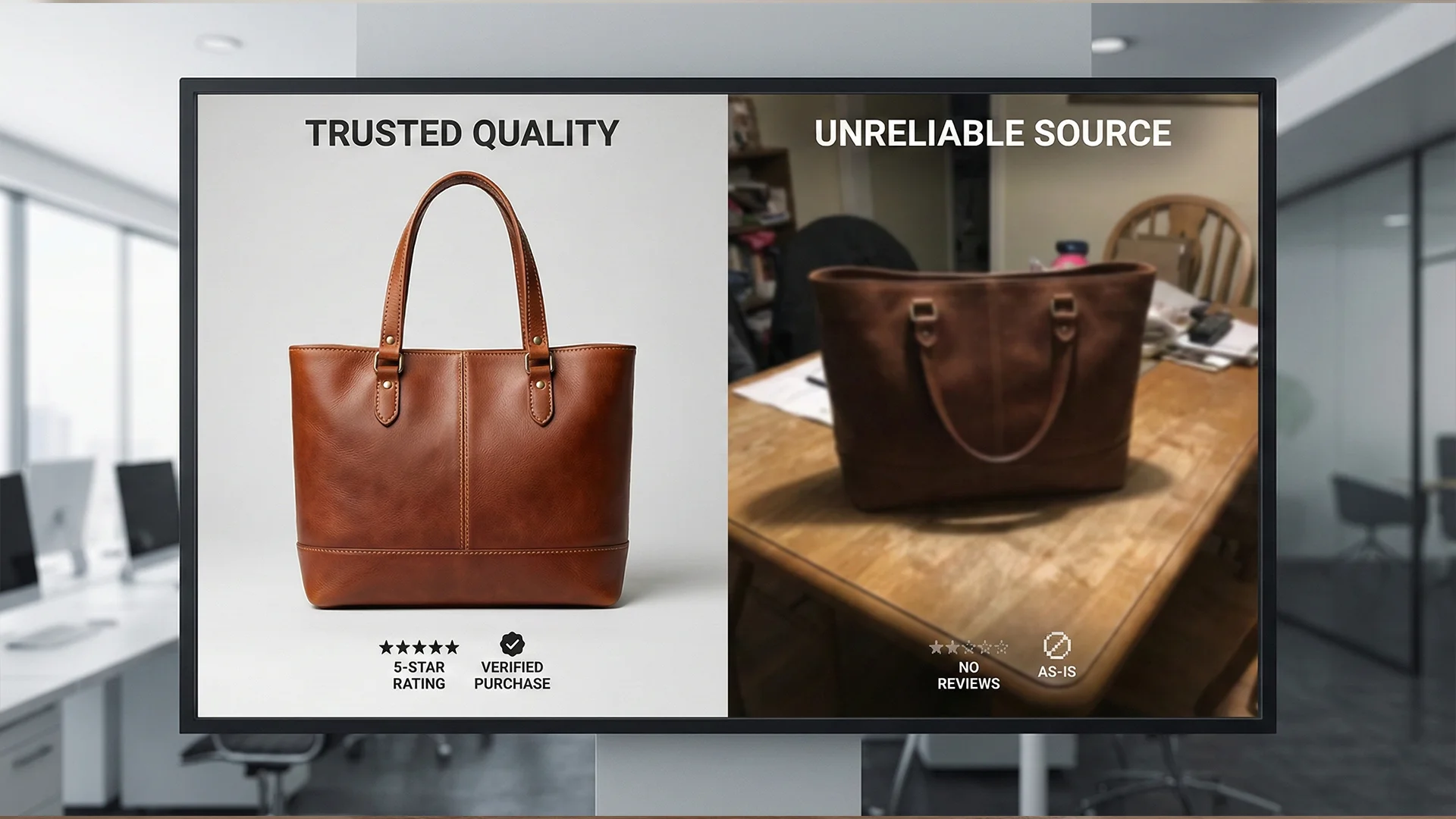
Poor product photos actively drive customers away. Blurry images, inconsistent lighting, and amateur backgrounds make shoppers question whether the listing is legitimate. Doubts lead to exits. Even when customers complete purchases despite weak visuals, return rates climb because reality fails to match unclear expectations.
Clear, clean images confirm the product authenticity. When product photography for ecommerce meets professional standards, customers trust that what they see reflects what they'll receive. This trust proves especially critical for categories where details matter:
- Technology products where buttons, ports, and build quality influence decisions
- Cosmetics where texture, color accuracy, and packaging signal quality
- Accessories where materials, finishes, and craftsmanship justify pricing
- Jewelry where clarity reveals the difference between cheap and premium
Categories with complex details demand professional product photography that captures what customers need to see before committing.
How Hero Images Drive Conversion Above the Fold
Everything above the fold determines whether visitors scroll or leave. If the hero image fails to capture attention and communicate value, customers never see your compelling product descriptions, glowing reviews, or competitive pricing below. Weak ecommerce product images keep that gate locked.
The downstream effects compound. Bounce rate increases when hero images underperform. Cart editions drop because visitors leave before considering purchase. Click-through rates on calls-to-action suffer because fewer people reach those buttons. Every metric tied to page engagement traces back to that first visual impression.
No amount of copywriting talent or conversion optimization tricks compensates for a hero image that fails to engage. Fix the visual first, then optimize everything else.
What Makes a High-Converting Hero Image?
Technical excellence separates images that increase product page conversion from those that suppress it. Several elements must align for optimal results.
Resolution and lighting come first. Images must support zoom functionality without pixelation. Lighting should be even, flattering, and accurate to the product's real appearance. High quality product images look sharp at any magnification level customers might use.
Composition and background matter equally. The product should occupy the frame confidently with appropriate negative space. Backgrounds stay neutral unless category conventions suggest otherwise. Cluttered compositions confuse viewers and dilute focus. Optimized product images use contrast strategically to draw attention to key features without creating harsh or unnatural appearances.
Category-appropriate angles showcase products correctly. Electronics typically need three-quarter views showing interface elements. Apparel requires front-facing shots. Jewelry demands angles that capture sparkle and detail. Wrong angles hide selling points that customers need to see.
Reflection control separates amateur from professional work. Glossy and metallic products require careful lighting that shows dimension without distracting glare. Noisy reflections obscure details and look unprofessional. Finally, product image quality includes faithful color rendering that prevents returns caused by mismatched expectations.
Category-Specific Approach (Not All Products Are Shot the Same Way)
Different product categories demand different photographic approaches. Generic techniques fail because they ignore what customers in each vertical need to see.
- In the cosmetics category, visual emphasis is placed on texture, sterility, and a sense of purity. Clean backgrounds combined with macro-level detail help communicate formula quality and reinforce perceptions of safety and refinement.
- Food imagery prioritizes juiciness, freshness, and appetite appeal. This effect is achieved through controlled moisture, deliberate color saturation, and carefully selected props that enhance the sensory impression without appearing artificial.
- Jewelry visuals focus on sparkle, intricate detailing, and a premium aesthetic. Focused lighting and precise reflection management are essential to highlight craftsmanship while maintaining a sense of luxury.
- In fashion, attention is directed toward fabric texture, garment construction, and fit. Using consistent models or standardized forms, along with accurate color representation, helps ensure visual reliability and supports purchase confidence.
- Electronics imagery emphasizes materials, interface elements, and precision build quality. Sharp focus on buttons, ports, and screens, combined with controlled reflections, conveys technical accuracy and reinforces perceptions of engineering quality.
Each category carries expectations shaped by leading brands. Customers compare your images against the best they've seen in your vertical. Meeting these standards requires understanding what signals quality in each specific context.
The conclusion is objective: professionalism matters. Category expertise separates photography that builds ecommerce user trust from photography that undermines it.
Lifestyle vs. Clean Studio Hero Images
Clean catalog photography works best when customers need to evaluate product details without distraction. White or neutral backgrounds eliminate competing visual elements and focus attention entirely on the item. For products where specifications and features drive decisions, studio shots with trust signals ecommerce shoppers recognize provide clarity that lifestyle images cannot match.
Lifestyle hero images serve different purposes. They help customers envision products in context – furniture arranged in a room, clothing worn by a person, cookware used in a kitchen. When emotional connection and aspiration drive purchases more than technical evaluation, lifestyle images enhance perception and create desire.
The choice depends on what customers need. Some categories convert better with pure product focus. Others benefit from contextual storytelling. Product image standards vary by vertical and price point. Testing reveals which approach works for your specific audience.

Mobile-First Hero Images
Mobile traffic accounts for 70-80% of ecommerce visits. Your hero images must perform on small screens first, desktop second. This reality demands specific optimizations that many brands overlook.
Vertical proportions display better on phones than horizontal compositions designed for desktop monitors. Important details require sufficient size to remain visible without zooming. Product page performance depends on images that communicate value instantly on the smallest screens your customers use.
The risk is real: small elements disappear on mobile. Intricate features that look impressive on large displays become invisible on phone screens. Buttons, textures, and fine details that sell products on desktop vanish on mobile unless photography specifically prioritizes them. Hero images optimized for mobile mean conversion rate improvement across the majority of your traffic.
Hero Images Enable Higher Pricing Power
Premium-looking photography justifies premium pricing. When visuals signal quality, craftsmanship, and attention to detail, customers accept higher prices without resistance. The image creates perceived value that supports margin protection.
The reverse proves equally true. Cheap-looking visuals cheapen product perception. Even well-made items appear less valuable when photographed poorly. This visual devaluation creates pressure for discounts, as customers expect lower prices to match lower perceived quality.
Visual branding protects margins. Consistent, professional imagery positions products appropriately in customer minds. Investing in better product photography services pays returns through both higher volume and stronger margins.
Why DIY Photos Fail (And Cost More Than They Save)
Amateur photography creates problems that compound over time:
- Overexposure washes out details and makes products look flat
- Harsh shadows distort shape perception and hide features
- Wrong white balance shifts colors inaccurately, causing returns
- Shape distortion from incorrect lenses makes products look cheap
- Inconsistent setups produce galleries where items seem to be from different stores
Equipment alone doesn't solve these problems. Without expertise in lighting, composition, and retouching, expensive cameras produce expensive failures. Brands attempting DIY often reshoot entire catalogs within a year, paying twice for worse results.
The economics favor professional ecommerce content production from the start. Professional equipment plus expert retouching plus systematic workflow costs less than repeated amateur attempts. First-time-right photography protects both budget and brand perception.
Professional Studio Workflow (How We Build High-Converting Hero Images)
Studios delivering consistent results follow systematic processes that amateur setups cannot replicate.
Light control eliminates variables. A commercial photography studio with controlled environments produces repeatable results across thousands of SKUs. Every product receives identical lighting treatment, building visual consistency throughout your catalogue.
Calibrated monitors ensure color accuracy from capture through delivery. What photographers see matches what customers see. This calibration chain prevents color drift that causes returns and damages trust.
Layout selection matches category requirements. A product photography studio maintains setups optimized for different product types, switching between configurations as needed. Electronics, cosmetics, fashion, and jewellery each receive appropriate treatment automatically.
Category expertise guides angle selection. Experienced studios know which views sell products in each category without experimentation. Technical retouching enhances without over-processing – clean results emerge without artificial glossiness or unrealistic perfection.
Scalable standards handle volume. Whether shooting ten products or ten thousand, an ecommerce product photoshoot maintains quality throughout. This scalability matters for growing catalogues across multiple platforms.
Final Thoughts
Hero photography determines whether visitors become customers. That single image above the fold carries more conversion potential than any other page element. The chain is direct: professional hero photos build trust, trust drives engagement, engagement produces sales.
Photography isn't an expense to minimize. It's an investment that pays off through lower bounce rates, higher cart additions, fewer returns, and stronger pricing power. Quality marketplace product photography separates sellers who struggle from those who thrive. Brands that treat product imagery as infrastructure rather than cost position themselves for sustainable growth built on visual credibility.
